Probabilistic thinking for simulations
Why do we care about probabilities?
The ‘trajectory’ of a simulation is the sequence of possible state values that its partitions actually take during a specific simulation run.
Probabilities can represent sampling all of the possible trajectories that a simulation could take in time, simultaneously.
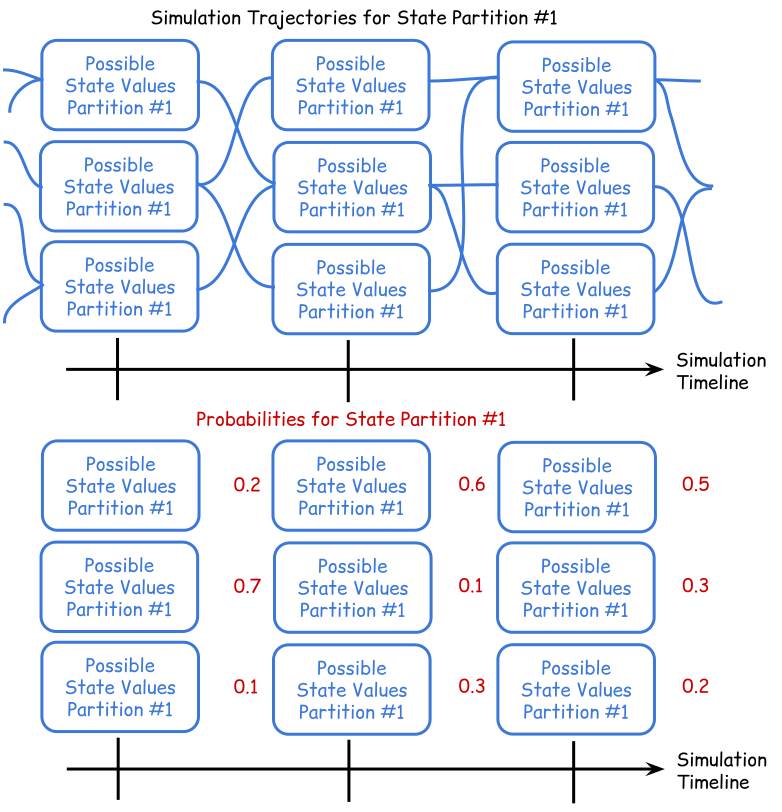
Using this representation of a simulation, there are two important use cases.
The first uses all of the possible trajectories the simulation can take to represent how likely it is to take them. This makes it possible to create algorithms which learn the most likely parameters for state partitions to match real-world data.
The second uses the probabilities to represent a model in place of the simulation itself. In the right circumstances, this results in algorithms which are much more efficient than sampling multiple trajectories explicitly.
Probabilities and regions
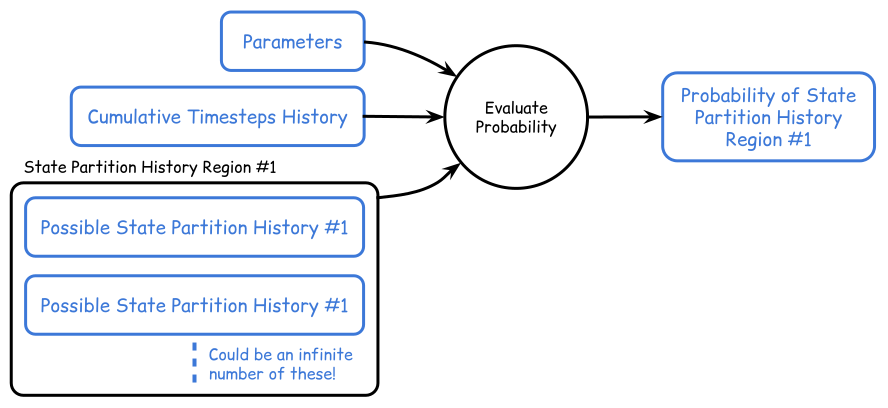
Evaluating the probability of a particular state partition history, given parameters and a cumulative timesteps history, looks a similar to the iterate computation. However, in contrast, this computation does not progress forward in time.
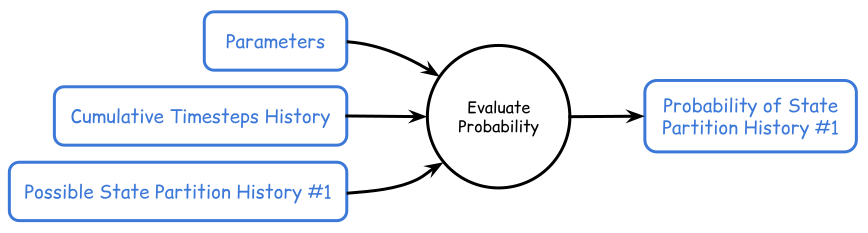
We might also want to evaluate the probability of regions which join together possible values that the whole state partition history can take.
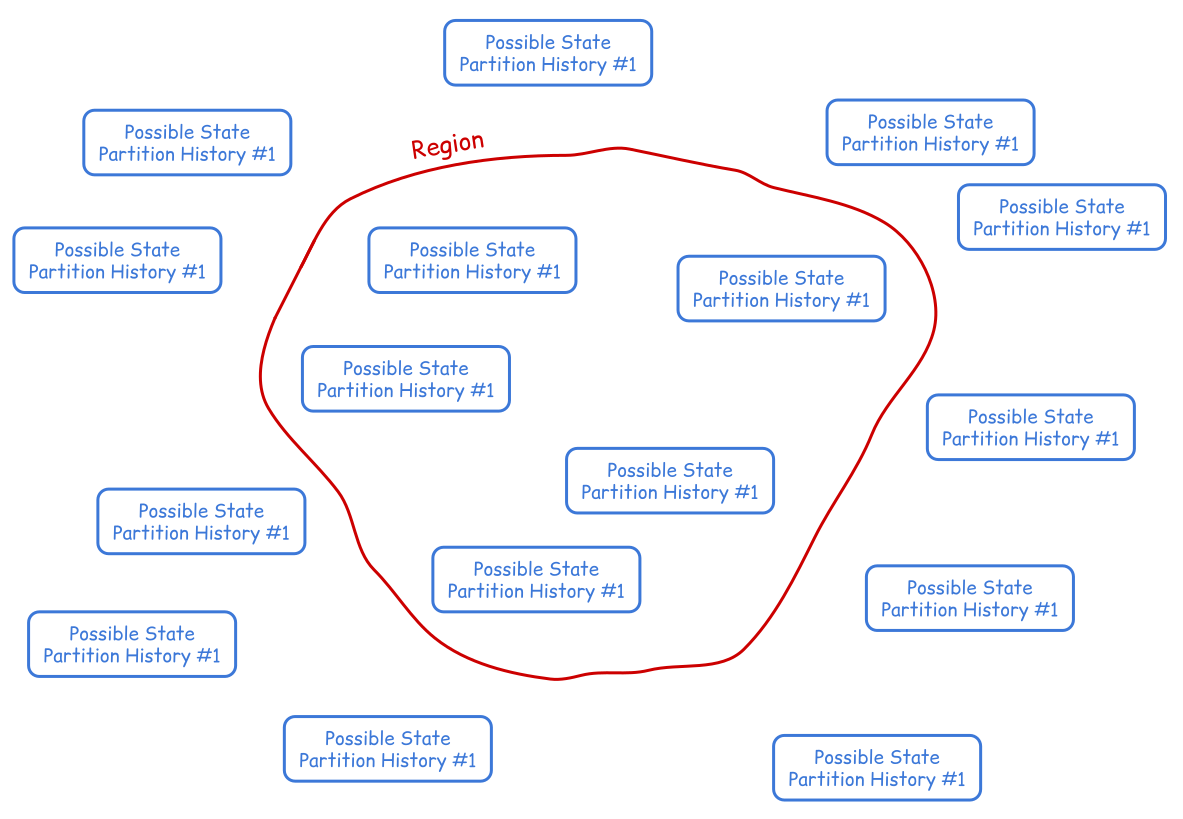
In many situations, it would be impossible to count the all of the possible values in some regions, but we can still imagine the computation in this way.
Conditional probabilities
We can relate two successive probability evaluations in time together by making the answer of the second depend on the outcome of the first.
We call the second of these two evaluations a conditional probability because its probability is conditional on the probability of the first.
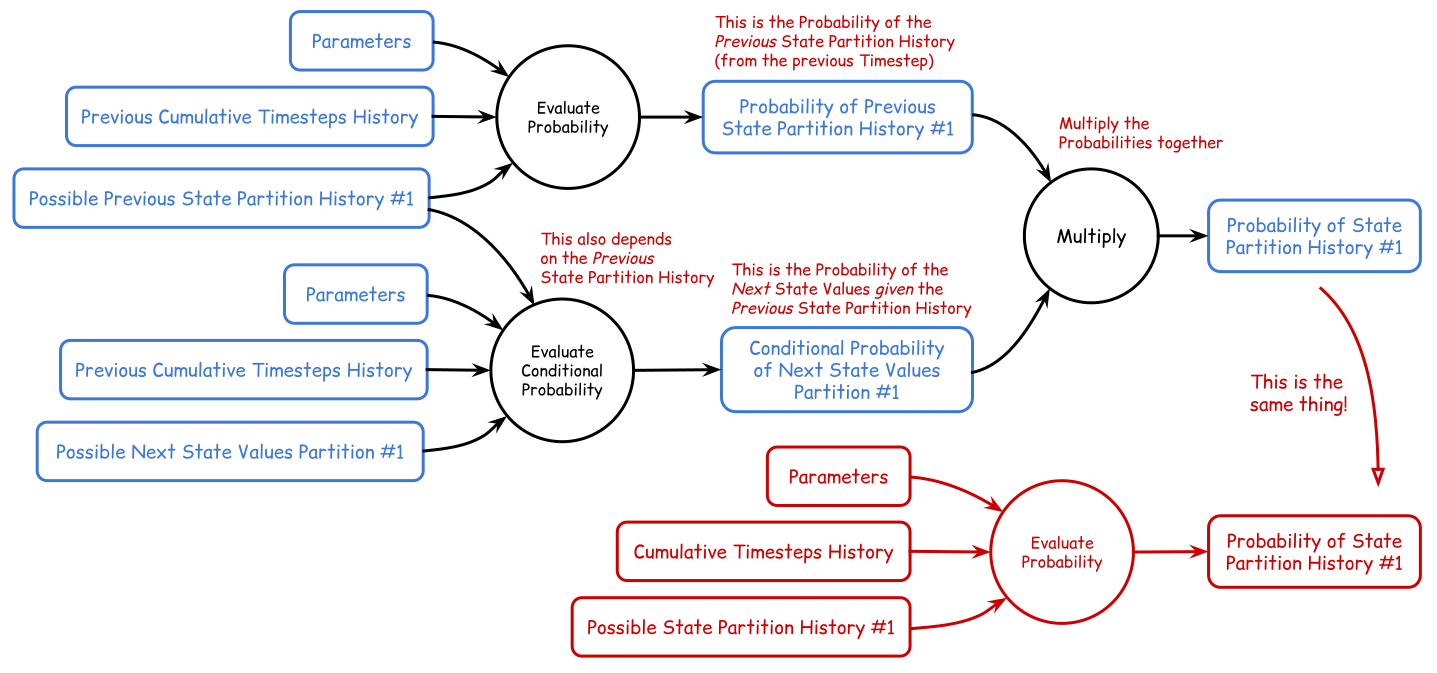
The probabilities for the whole state partition history change as the simulation advances in time by adding the next state partition values into the history.
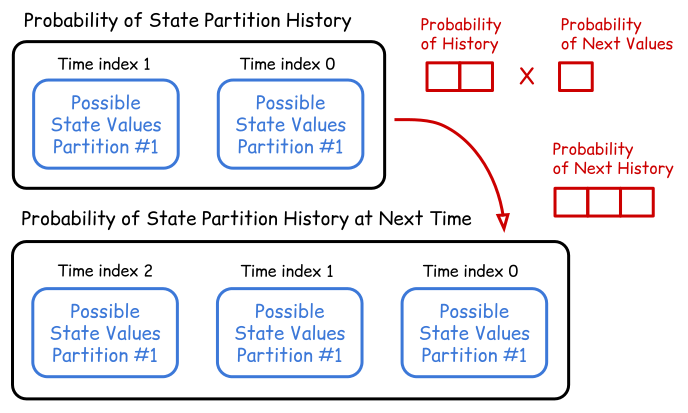
This concept also applies to the probability of regions.
Note how this relationship also describes how the probabilities of state partition histories can evolve in time. One applies the same calculation to the output from the previous one, and so on, recursively.
So why can’t we just use this recursive relationship to model all the trajectories of the simulation at once? For some simpler systems this is indeed possible, but for most simulations in practice this is computationally infeasible.
Think about how one might store the set of all possible state partition histories for a sequence of coin flips, and then how this can proliferate in time as the simulation advances.
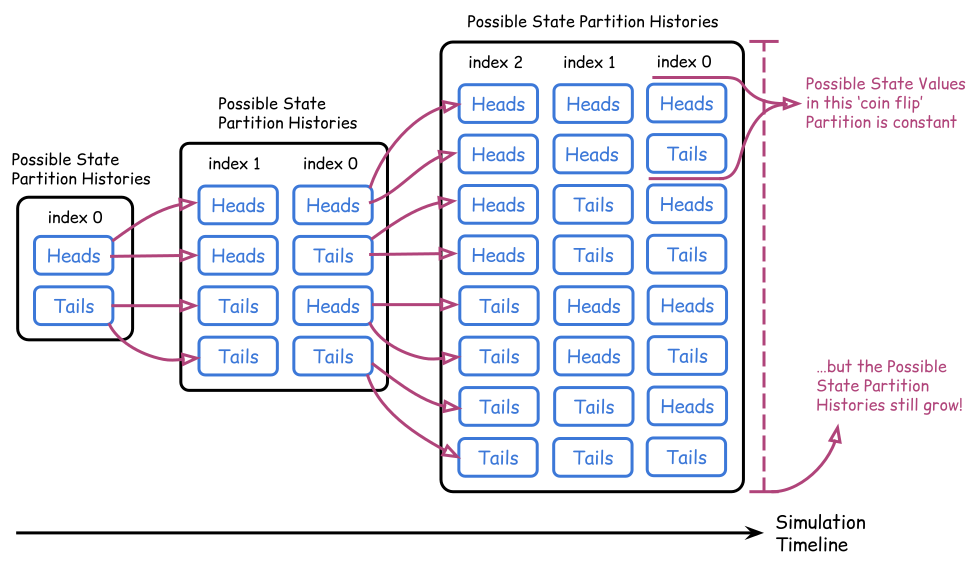
The possible state partition histories grow even though the possible state values of a coin flip always remain the same (heads or tails).
Example: Randomly moving point in 2 dimensions
In practice, for most real-world systems, the set of possible state values also grows. To see how this can be the case, consider the trajectories of a randomly moving point on a simple 2-dimensional grid.
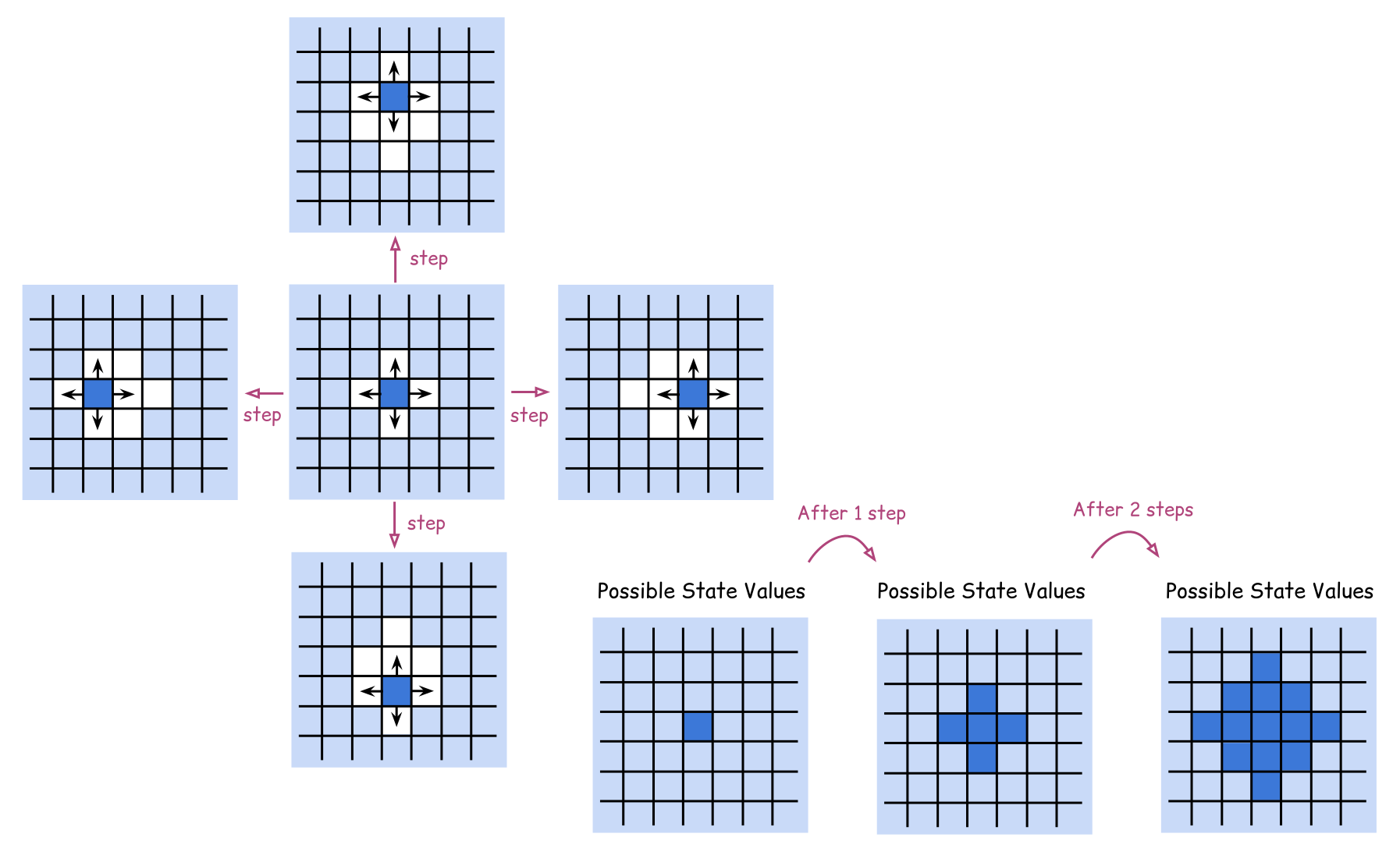
Estimating the statistics of state values
There is a way we can compute these probabilities without having to trace the path of every possible trajectory, and often without having to keep a record of every possible state value.
We start by estimating the statistics of these probabilities.
The simplest example of these statistics is the estimated mean state value.
The obvious way to calculate this is to take the average state value for a given timestep across multiple simulation trajectories.
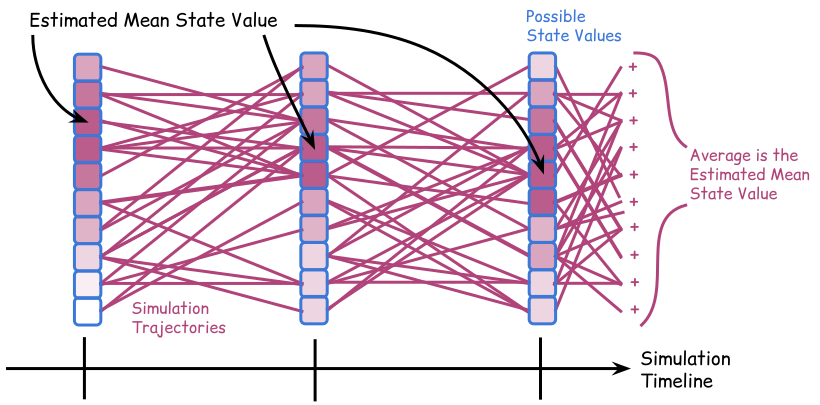
But could we get an estimate of statistics from only one trajectory to avoid all the additional computations?
Example: Estimating with a weighted average
Yes! If we have an accurate ‘weighting model’ for the past values, we can get an estimated mean state value from a weighted average over the full state partition history.
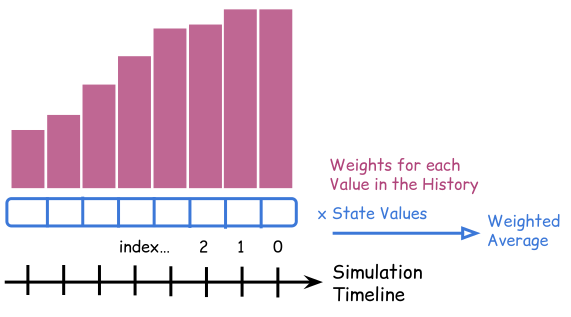
We might also train a machine learning model to predict the statistics of state values from the full state partition history as an alternative.
Note that there are situations where using the state partition histories from one trajectory is not equivalent to using multiple trajectories (see ergodicity). But this kind of technical problem can often be mitigated by using some mix of the two methods.
Estimating the probabilities of state values
So we have the statistics, but where have the probabilities gone?
There are many different types of mathematical formulae or machine learning model which can provide a map back from these estimated statistics into probabilities of state values in time for either one or multiple trajectories, depending on the right circumstances.
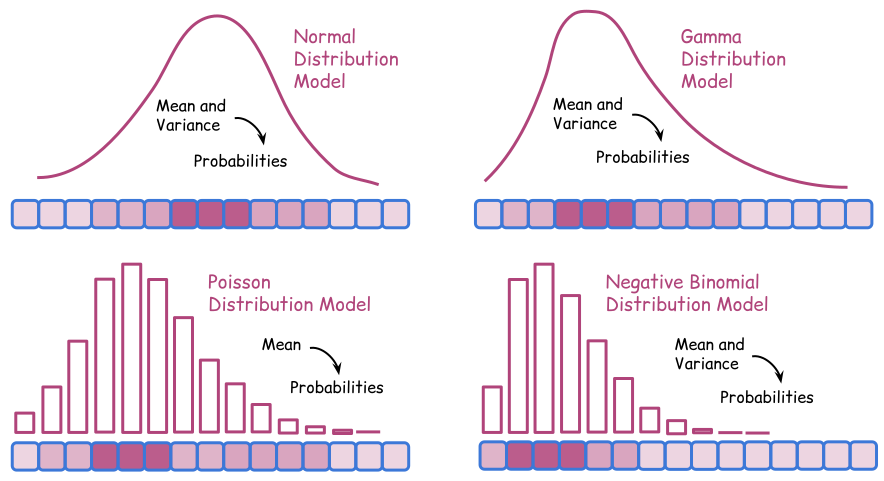
Using calculations of the estimated statistics for a single trajectory from the state partition history, we can design a ‘probabilistic sample weighting’ algorithm which compresses the information held within the state partition history into a small amount of data (the statistics).
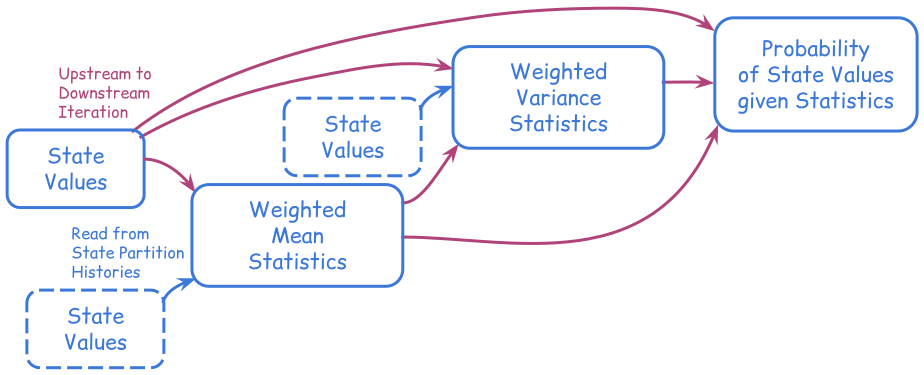
We can then use these statistics to calculate estimated probabilities for any possible state value in time.