Energy demand response optimisation for the national grid
Grid-scale batteries promise to balance the intermittent renewables of a net-zero electricity system: but how should they be dispatched, and does the answer change as the grid gets greener?
The simulation below is fitted to five years of NESO half-hourly demand data and tracks how a 100 MW / 200 MWh battery’s state of charge, revenue, and carbon savings evolve under different dispatch strategies and grid mixes.
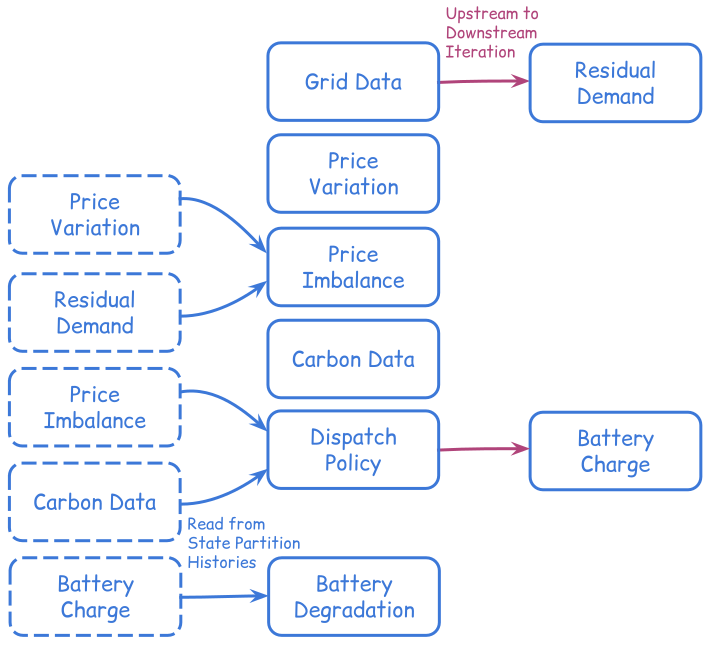
Pick a dispatch policy, a grid scenario, and tune the price thresholds; watch how the battery’s revenue and carbon impact evolve over a year.
The link to this project can be found here.
Data and licence: This simulation is fitted to half-hourly demand and embedded-generation data from the NESO Data Portal (NESO open data), with carbon-intensity and generation-mix figures from the Carbon Intensity API (CC BY 4.0) and solar estimates from Sheffield Solar PV_Live. The data is used here for illustration only and is not redistributed.